Posts

Showing posts with the label History

World YMCA letter to the United Nations about Kosovo

Image
The following is a letter sent to the United Nations by the World Alliance of YMCAs. The original can be found in the World YMCA archives in Geneva. *In 2020 the Kosovo movement reached out to Mr. Nick Nightingale having a phone call with him on the 11th Anniversary of the the Republic of Kosovo and recieving a message from him 20 years after this letter.

YMCA moving in another direction - Anniversary Review Part 9

Image
The scope of the YMCA's work was also moving in another direction - to include women and girls. The Young Women's  Christian Association, set up in 1855 was originally an alternative to the YMCA for women and has always been a separate organization. But by the 1960s women and girls were becoming involved with the YMCA - staying in hostels and joining mixed youth clubs. There were even some associations with clubs just for women. In response, in 1964 the national movement allowed women to become full members and encouraged local YMCAs to do the same. The 1960s and early 1970s were generally a time of re-assessment for the YMCA, centered on a 1970 report, "Changing Needs and New Perspectives". As a result of the report, it was decided to allow local YMCAs to have a single form of the membership, rather than full and associate membership if they wished. The conditions for this new membership did not stipulate that the member should be a Christian basis of the mo...

YMCA after the second world war -Anniversary Review Part 8

Image
After the second world war, as in 1918, the YMCA helped restore normality after the chaos. As well as organizing trips to war graves abroad for bereaved, the relatives, the association also established hostels for refugees from Germany, Latvia, Poland, Lithuania, Ukraine, and Yugoslavia. The British YMCA helped 20,000 of these “European Volunteer Workers,” settle in Britain, Giving them a home while they worked in industry and farming. Afterlife settles into a peacetime routine, this most recent period in YMCA history has seen ventures to inject Christianity into the industry, a rapidly expanding and changing hostel programme, and a concentration on youth work, health and fitness, and training. Soon after the war ended, a whole new programme of work, focused on bringing Christian values into business and industry, began. The programme - based at residential centers at Kingsgate in Kent, Cheshunt College at Cambridge, Rhoose Youth College in Wales and Dunford House Sussex ...

The Second Time Around -Anniversary Review Part 7

Image
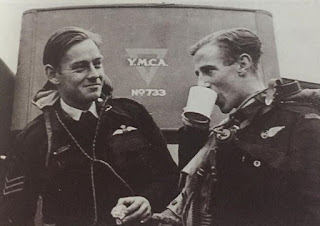
Tea Cars and Bombed-out Birthday Celebration Almost as soon as the second world war broke out in September 1939, the YMCA stepped in with a new idea for bringing comfort to the troops.   The first “Tea Car”, or mobile canteen, a second-hand van fitted out with a small kitchen and painted camouflage green, was in use on the streets of East London by September 23. By the end of 1940, there were 500 vans in service.  As well as visiting isolated army outposts along the British coastline, these vans followed the troops into France and Flanders. As the German armies pushed the British back to the French coastline the vans raced alongside the withdrawing armies, serving tea and selling cigarettes, chocolate, cake, hair cream, tooth-paste, and stationery. The crews, many of the woman, stayed with the armies until the very last moment. As rowing boats arrived from Britain to evacuate the army from the beaches of Dunkirk the crews of three mobile canteens saw their vans and ...

The World-wide Movement -Anniversary Review Part 6

Image
It was 1851 and the whole world was in London for the Great Exhibition - a grand showcase of British industry held in the specially constructed Crystal Palace. For the YMCA it seemed the perfect chance to try to spread their ideas worldwide. More than 300,000 leaflets about the YMCA's work were handed out and as result, branches were set up in the U.S.A and Canada. In 1852 George Williams himself set up a YMCA in Paris, and associations were formed in Adelaide and Calcutta. Over the next few years, letters were sent and visits were made between the countries and in 1855 it was decided to hold a conference of the YMCA's.  By this time Holland, Switzerland, Germany, France, and Belgium were also involved. The delegates decided to form a confederation, soon to be named the World Alliance of YMCA's. The resolution they made about the aims of the YMCA, which became known as the Paris Basis, is still at the core of the movement today. It said: " The Christian Association...

The YMCA in Peace -Anniversary Review Part 5

Image
After the war, as Britain was changing so was the YMCA. The new programme used ideas and equipment left over from the war and adapted them to meet the needs of a country recovering economic recession. At this time youth work, education and physical fitness became a more fundamental part of the YMCA’s work. Rather than just fringe activities. In the aftermath of the war, the YMCA spent years picking up the pieces. From 1916 until 1927 its Employment Department for men discharged from the forces found jobs for 38,000 ex-servicemen. It was not until 1923 that the association began to settle down once more to peacetime work. The thousands of huts which provided comfort for troops during the war were dismissed and put together in cities, towns, and villages as “Red Triangle Clubs”. In 1932 there were 406 of those across the country. They were centers for YMCA activities and provided a meeting place, with billiards or pool and bar serving tea. Some of them died out, others went t...

The YMCA in War -Anniversary Review Part 4

Image
For many people, the name of the YMCA conjures up memories of the organization’s work during the two world wars. Through its work with the forces and their families, civilian victims of war and prisoners of war, the organization touched more people and gained more publicity and recognition than ever before. In 1917 the association was mentioned 143 times in the “Times” newspaper - more than at any other time before or since. Certainly, during the first world war, the YMCA suddenly began to come into contact with a much broader section of society.  Work with soldiers had first begun in Britain in 1890 when Colonel Goldsmith, a YMCA president in Devonport, suggested the association should provide activities and support at Summer training camps for army volunteers. Over the next few years, the YMCA became involved with the expanding Territorial Army. Interior of World War One YMCA hut at the Sling Plantation, Salisbury Plain The moment war broke out in 1914, the YMCA imme...

The life of George Williams - Anniversary Review Part 3

Image
Born The Son of a Somerset farmer, George Williams died a wealthy businessman renowned for setting up a world-wide Christian movement with more than 7,000 branches in 45 countries. With his commercial empire and a lifetime of good works behind him he had become the "last of the merchant philanthropists".  His life began humbly at Ashway Farm, Dulverton, Somerset, on October 11th, 1821. After going to school in Tiverton he returned to the family farm, but it soon became clear that he was not cut out for a life on the land. By the time he was fourteen, he was apprenticed to a draper in nearby Bridgwater. Far from showing signs of being a potential Christian leader, he said of himself:  "I entered Bridgwater a careless, thoughtless, godless, swearing young fellow." But he was soon to be converted. His apprentice's indenture agreement said that he must attend the Zion Congregational Church. Gradually he was influenced by the service and by some of his fellow appren...

The Early Years -Anniversary Review Part 2

Image
The YMCA was not the first of its kind; there had been other groups set up for young man, some with a religious basis. Its rapid growth, however, was unmatched by anything that had gone before.  The strong evangelical Christianity of its members, which was not confined to one denomination, was a firm foundation for success. The time and the place of the YMCA’s foundation were also important. As Britain became industrialised, communications improved-the first railway opened in the 1830's and 1840. The drapery trade was the fastest growing, most efficient business and London was its heart. Hitchcock and Rogers had a wholesale business with contacts across London and in other towns and cities, making it easy for news of the YMCA to spread. This, along with the influential friends George Williams had made while worshiping at the King’s Weigh House Chapel, helped to seal the YMCA’s growth. The association expanded quickly. Members sent a letter to other drapers’ houses across Lon...

The Birth of YMCA -Anniversary Review Part 1

Image
The world-wide YMCA movement began in a small bare room above a  shop in St Paul’s Churchyard, in the heart of present day London. London at that time was a dirty, chaotic city. Mingled among its population were about 150,000 young, male shop workers. They were supporting more “respectable” than the manual workers of the metropolis, but they worked very long hours- from 7am to 8 or 9pm, six days a week. With such little time for themselves, and usually living cramped in their employers’ homes, usually living cramped in their spare time to blot out their boredom at a local tavern or gambling house. According to a shop assistant at the time, who went on to become a clergyman: “No class was more degraded and dissolute, none were sunk deeper in ungodliness and dissipation, than the shop-men of London.”        One of these 150,000 was Georges Williams, a farmer’s son from Somerset. George had taken up a post at Hitchcock and Rogers, a draper’s shop with 14...

History of Work in Yugoslavia (1920's Report)

Image
THE YOUNG MEN'S CHRISTIAN  ASSOCIATION HISTORY OF WORK IN YUGOSLAVIA       I)           YMCA  WORK IN GENERAL     II)           YMCA WORK AMONG BOYS Y.M.C.A.  WORK IN GENERAL The foundation of the Christian activities among the laymen in our country was laid down by Dr. John R. Mott in April 1911. Dr. Mott has visited the University in Belgrade at that time , and a direct consequence of his conferences the Student Christian Movement begun. And and has continued its active work under splendid leadership of Dr. Marco Lecco, former Rector of the University. These activities has been purely spiritual  and limited only to the students and  professors of the University. At that time we had no other Christian laymen’s movement. The name of the Young Men’s Christian Association was known only in a limited circle. The war...

Keep Walking...

Image
2004. YMCA Europe was organizing "Catch the vision" in Prizren, a multiethnical, multicultural city in a new and unknown territory: Kosovo. When I got the email confirming that I will be one of the participants I was very happy and curious to find out more about the place. Unfortunately at that time not too much information was available, so I ended up in Pristina airport, surrounded by military forces from different countries, getting a KFOR stamp in my passport. It was one of the first "wow" experiences in my YMCA life. Prizren 2004 The image of the parking at the airport was a bit strange for someone who had not seen any weapon so far. Tanks and military cars, helicopters and barbed wire all over the place. I was waiting with other participants and all the faces around me were scared and concerned.   Prizren was indeed a real experience: buildings, architecture, food, smells, people, thousand of electric generators on the streets making a huge noise. L...